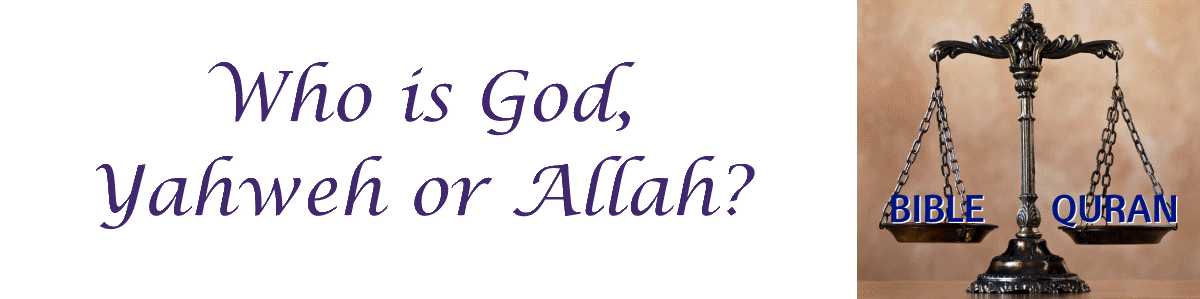
According to the Bible
The Bible makes it very clear what sin is. God gave the Ten Commandments as His law (His instruction). The Lord Jesus summarized the meaning of God’s law: in essence, it is love for God and for one’s fellow human being (see Matthew 22:37–39, as quoted in the previous chapter). One must love God above all and one’s neighbour as oneself. If a person lives this out, he fulfils the law. Sin is therefore the violation of the law, or lawlessness:
1 John 3:4: “Whoever commits sin also commits lawlessness, and sin is lawlessness.”
God’s law (His instruction) is love. Therefore, any violation of the command to love is sin and lawlessness. In other words, sin is lovelessness or loveless behaviour. Anything a person does that dishonours God or harms one’s neighbour is lovelessness, and therefore sin. According to the Bible, the wages of sin is death—eternal separation from God.
Romans 6:23: “For the wages of sin is death, but the gift of God is eternal life in Christ Jesus our Lord.” – This death means eternal separation from God.
Sin and its punishment, according to the Bible, are clear and entirely understandable. The punishment is the death of the sinner, both physical and spiritual (eternal perdition). This death does not mean being tortured, brutally murdered, or suffering in any other way. Apart from death as the required penalty for sin, God alone decides how discipline is applied during a person’s earthly life. He does not inflict unnecessary or ongoing torture or suffering.
God loves humanity and desires to save us from this death. In His love, God ordained that He Himself, in the Lord Jesus Christ, would provide the sacrifice that would bear the punishment for human sin. Every person who believes and accepts this is forgiven based on Christ’s merit and released from punishment.
Those who have believed and accepted God’s gift of salvation through the Lord Jesus belong to Him, and His love is poured out into their hearts.
Romans 5:5: “Now hope does not disappoint, because the love of God has been poured out in our hearts by the Holy Spirit who was given to us“.
When His love is poured into a person’s heart, His law is written there as well. Through the power He provides, one has the ability to live accordingly.
If a believer, due to human weakness, does sometimes sin, the following applies:
1 John 1:9: “If we confess our sins, he is faithful and just to forgive us our sins, and to cleanse us from all unrighteousness.”
God does sometimes allow suffering or serious difficulties in the lives of devoted Christian believers whose sins have already been forgiven. Hardship and severe problems are not always punishment for sin – except perhaps when a true believer has acted lovelessly again. Normally, suffering is simply the consequence of sin that has already been forgiven. Severe suffering or fatal persecution in the lives of devoted Christians is the result of other people’s sin.
According to Islam’s Books
The Qur’an does not give a clear definition of what sin is. Instead, various offences and sins are listed by name, and statements are made about them. Sin in Islam is therefore simply the violation of Allah’s commands and prohibitions. Allah decides whether a specific act is sinful, and he may change his mind:
Al-Bukhari (Khan, 1987, Vol. 9:343): “Something forbidden by the Prophet is legally prohibited unless there is proof that (later on) it was (made) legal.”
Karim, 1998, Vol. 3:128 lists 53 sins, but a Muslim may not know whether the list has changed: “The following have been enumerated by the jurists to be the great sins:” Examples include: nr. 1: “To set up a partner with Allah.” no. 12: “Rebellion without just cause”, nr. 20: “To have friendship with the unbelievers to the detriment of Islam.”
Apart from such lists in the Qur’an and Hadith, a person does not necessarily know whether his actions are sinful. Some actions are sinful in certain circumstances and not in others – for example, alcohol and gambling (Sura 2:219; 5:90–91), killing (Sura 5:32; 9:5), and adultery:
Sura 17:32: “Nor come nigh to adultery: for it is a shameful (deed) and an evil, opening the road (to other evils).”
Versus Sura:
23:5–6: The Man – “Who abstain from sex, 6. Except with those joined to them in the marriage bond, or (the captives) whom their right hands possess,- for (in their case) they are free from blame,”
When Allah decides an act is sinful, he also decides what the punishment is. Except in cases involving actions against the Islamic faith, a person often does not know whether his deed is sinful, nor what the punishment will be. There is at least some clarity for certain offences. One example is theft:
Sura 5:38–39: “As to the thief. Male or female, cut off his or her hands, a punishment by way of example, from Allah, for their crime: and Allah is exalted in power. But if the thief repents after his crime, and amends his conduct, Allah turns to him in forgiveness;” (Ali, 2000:88). Note that in the same author’s earlier translation, (Ali, 1946:254) these two verses are numbers 41 and 42.
The following quotation is one of many commands in the Qur’an regarding punishment. Fortunately for women, the punishment is not as violent as for most other offences. Allah gives clear instructions on how Muslim men must treat their wives, whom he clearly regards as inferior:
Sura 4:34 34. “Men are the protectors and maintainers of women, because Allah has given the one more (strength) than the other, and because they support them from their means. Therefore the righteous women are devoutly obedient, and guard in (the husband´s) absence what Allah would have them guard. As to those women on whose part ye fear disloyalty and ill-conduct, admonish them (first), (Next), refuse to share their beds, (And last) beat them (lightly); but if they return to obedience, seek not against them Means (of annoyance).”
Further punishments are prescribed throughout the Qur’an. It is impossible to list them all, and the punishment is not always the same for the same offence. It depends on what Allah considers sufficient.
Muslims do not always know whether they have sinned, how serious the sin is, or what the punishment will be. Punishment in Islam can be extremely severe. For non-Muslims, the situation is even worse:
Sura 3:56: “As to those who reject Faith (Islam), I will punish them with terrible agony in this world and in the Hereafter, nor will they have anyone to help.” (Ali, 2000:137) (Emphasis added).
Sura 33:68: This is what will happen to a person who disobeys Allah and Mohammed: “Our Lord! Give them double Penalty and curse them with a very great Curse!”
Sura 24:19: “Those who love (to see) scandal published broadcast among the Believers, will have a grievous Penalty in this life and in the Hereafter: Allah knows, and ye know not.”
Sura 8:12–13: “Remember thy Lord inspired the angels (with the message): I am with you: give firmness to the Believers: I will instil terror into the hearts of the Unbelievers: smite ye above their necks and smite all their finger-tips off them. This because they contended against Allah and His Messenger. If any contend against Allah and His Messenger, Allah is strict in punishment.”
Sura 73:12–13: “With Us are Fetters (to bind them), and a Fire (to burn them), And a Food that chokes, and a Penalty Grievous.”
Even Muslims themselves may not know how severe their punishment will be. The following example illustrates this:
Al-Bukhari (Khan, 1987, Vol. 2:100): “The Prophet recited Surat-an-Najm (specific prayer where the forehead must get dirty as proof of prostration before Allah) at Mecca and prostrated while reciting it and those who were with him did the same except an old man who took a handful of small stones or earth and lifted it to his forehead and said, ‘this is sufficient for me.’ Later on, I saw him killed as a non-believer.”
Further examples of how Muhammad administered punishment:
Khan,1987 Vol.8:794 bl.520: “The Prophet did not cauterize (the amputated limbs of) those who fought (against Allah and His Messenger) and of those who were renegades (reverted from Islam) (therefore they bled) till they died.”
Khan, 1987:796 Vol.8 bl.521: “the Prophet ordered for some iron pieces to be made red hot, and their eyes were branded with them and their hands and feet were cut off and were not cauterized. Then they were put at a place called Al-Harra, and when they asked for water to drink they were not given till they died.”
A Muslim does know, however, that if he leaves Islam (becomes an apostate), his life is in danger unless he escapes successfully. Al-Bukhari understands and explains the Qur’anic command on this matter as follows:
Khan, 1987, Vol. 9:45: “Allah’s Messenger said, ‘Whoever changed his Islamic religion, then kill him’.”
Khan, 1987, Vol. 9:50: “So, where-ever you find them, kill them, for who-ever kills them shall have reward on the Day of Resurrection.”
Punishment in Islam is, as shown above, often extremely violent. (See chapter 9 for more information on warfare and jihad.)
Fortunately, there is sometimes forgiveness for a Muslim – if Allah decides so:
Sura 4:48: “Allah forgiveth not that a partner should be ascribed unto Him. He forgiveth (all) save that to whom He will” (Pickthall, 1997:59). Yusuf Ali’s translation says: “He forgives anything else, to whom He pleases”.
Sura 4:17: “Forgiveness is only incumbent on Allah towards those who do evil in ignorance (and) then turn quickly (in repentance) to Allah.” (Pickthall, 1997:56)
How does a Muslim know whether his repentance was quick enough, or whether Allah is willing to forgive? How does he qualify for “heaven” or “paradise”? There are certain requirements, but the matter remains uncertain. A few quotations follow:
Sura 2:82: “And those who believe (Muslims) and do good works, such are rightful owners of the Garden. They will abide therein.” (Pickthall, 1997:11)
Sura 23:102–103: “Then those whose balance (of good deeds) is heavy,- they will attain salvation: But those whose balance is light, will be those who have lost their souls, in Hell will they abide.”
Sura 11:114: “Allah revealed: ‘And offer prayers perfectly at the two ends of the day and in some hours of the night. Verily! Good deeds remove (annul) the evil deeds.’“
Sura 57:21: “Race one with another for forgiveness from your Lord and a Garden whereof the breadth is as the breadth of the heavens and the earth, which is in store for those who believe in Allah and His Messengers. Such is the bounty of Allah, which He bestoweth upon whom He will,” (Pickthall, 1997:396) (Emphasis added).
Good deeds may help, but it is often unclear which deeds are good. Allah must first decide whether he wishes to forgive. It remains an uncertain matter. According to Islam’s books, Muslims will only know in the afterlife whether their good deeds were sufficient to cancel their sins and qualify them for paradise.
As shown, the Bible is very clear about what sin is, what its punishment is, and how forgiveness is obtained. Sadly, many Christians do not know these things because they are not serious enough about their faith and the Bible.
So, what is Islam’s Paradise, and how does a Muslim qualify for it?