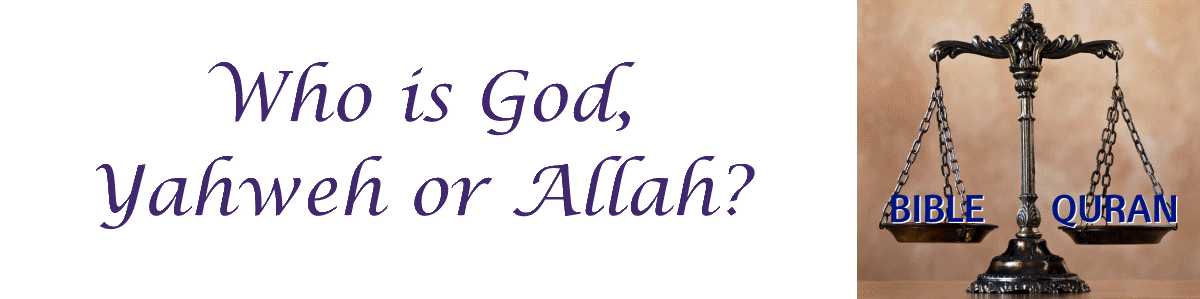
In the Bible
For the God of the Bible, breaking a covenant (agreement), an oath, or a vow is without exception sin, because it is deceitful, and deceit is nothing other than loveless behaviour. The Bible contains many examples of covenants, not only between God and people but also between people. No provision is made for breaking a covenant without sin. A party is released from a covenant only when the other party has already broken it.
The Bible contains many warnings against lying, breaking one’s word, and making false oaths. Some quotations:
Matthew 5:33: “Again you have heard that it was said to those of old, ‘You shall not swear falsely, but shall perform your oaths to the Lord.“
Psalm 24:4: “He who has clean hands and a pure heart, Who has not lifted up his soul to an idol, Nor sworn deceitfully.“
Yahweh further tells His people, Israel, in:
Zachariah 8:16-17: “These are the things you shall do: Speak each man the truth to his neighbor; Give judgment in your gates for truth, justice, and peace; Let none of you think evil in your heart against your neighbor; And do not love a false oath. For all these are things that I hate,’ Says the LORD.“
The God of the Bible is the God of truth, and in Him there is no falsehood. The Lord Jesus says in John 14:6:
“I am the way, the truth, and the life. No one comes to the Father except through Me.”
In truth there is no place for lies, and therefore the Bible forbids lying:
Leviticus 19:11: “You shall not steal, nor deal falsely, nor lie to one another.”
Proverbs 19:9: “A false witness will not go unpunished, And he who speaks lies shall perish.“
Colossians 3:9: “Do not lie to one another,”
For sinners, including liars, there is the warning in Revelation 21:8:
“But the … murderers, sexually immoral, sorcerers, idolaters, and all liars shall have their part in the lake which burns with fire and brimstone, which is the second death.”
This applies to all who have not repented, who have not accepted Jesus as Saviour, and who persist in their sin.
To enter into an agreement (treaty) with someone, whether under oath or not, and then not honour it, is loveless behaviour because it is to the detriment of the other party. According to the biblical definition, it is unquestionably sin. We know that many people, including Christians, break agreements and promises, but this is a violation of the command to love and therefore sin.
In Islam
Muslims, however, have Allah’s permission to break oaths and agreements under certain circumstances. The Qur’an makes such exceptions:
Sura 9:1–5): “A (declaration) of complete absolution on the part of Allah and His Apostle, from all agreements made with idolators.” (Ali, 2000:150) See also Pickthall (1997:127): “Freedom from obligation (is proclaimed) from Allah and his messenger toward those of the idolators with whom ye made a treaty.“
2): “Move about for four months, (as you will), throughout the land, but know that you cannot frustrate Allah (by your falsehood) but that Allah will cover with shame those who reject Him.” (Ali, 2000:150) and “Travel freely in the land four months, and know that ye cannot escape Allah and that Allah will confound the disbelievers (in his guidance)” (Pickthall, 1997:127).
3): “And an announcement from Allah and His Apostle, to the people (assembled) on the day of the Great Pilgrimage that Allah and His Apostle dissolve (treaty) obligations with the Pagans. If then, you repent, it were best for you; but if you turn away, know that you cannot frustrate Allah. And proclaim a grievous Chastisement to those who reject Faith (Islam)” (Ali, 2000:150). (Emphasis added).
5): “But when the forbidden months are past, then fight and slay the Pagans wherever you find them, and seize them, beleaguer them, and lie in wait for them in every stratagem; But if they repent, and establish regular prayers and practice regular charity (become Muslims and pay Zakat), then open the way for them,”
See also:
Sura 2:225: “Allah will not take you to task for that which is unintentional in your oaths” (Pickthall, 1997:26).”
Sura 5:89: “Allah will not call you to account for what is futile in your oaths, but He will call you to account for deliberate oaths: for expiation, feed ten indigent persons, on a scale of the average for the food of your families; or clothe them; or give a slave his freedom. If that is beyond your means, fast for three days. That is the expiation for the oaths you have sworn.” (Ali, 2000:95) (Emphasis added).
One wonders what the difference is between “futile in your oaths” and “deliberate oaths”. One would expect all oaths to be sworn deliberately. Yet even oaths sworn deliberately can be undone – if one has money or can fast for three days. A convenient escape clause, with divine permission:
Sura 66:2: “Allah has already prescribed for you, (o men), the absolution (undoing or getting out of – according to footnote) of your oaths (in some cases).” (Ali, 2000:525).
Allah therefore gives Muslims the right to break treaties or agreements with non-Muslims. In some cases, they must wait four months before doing so (see verses 2, 3, and 5 above).
The Hadith supports the Qur’an:
Al-Bukhari Vol. 6, B 60, No. 137: Narrated ‘Aisha: This Verse: “Allah will not punish you for what is unintentional in your oaths.“
Al-Bukhari Vol. 6, Book 60, Number 138: Narrated Aisha: “That her father (Abu Bakr) never broke his oath till Allah revealed the order of the legal expiation for oath. Abu Bakr said, “If I ever take an oath (to do something) and later find that to do something else is better, then I accept Allah’s permission and do that which is better, (and do the legal expiation for my oath ) “.
Al-Bukhari Vol. 8, Book 78, Number 656: Narrated ‘Aisha: regarding: ‘Allah will not call you to account for that which is unintentional in your oaths…’
Al-Bukhari Vol. 8, Book 79, Number 715: Narrated ‘Abdur-Rahman bin Samura: “Allah’s Apostle said, And if you take an oath to do something and later on find another thing, better than that, then do what is better and make expiation for (the dissolution of) your oath.“
Regarding the breaking of agreements, the compiler of Al-Hadis, Karim, 1998:23:133 Vol. 2 p. 397, explains in a footnote the following:
“Treaties and contracts which are consistent with the Quran and Hadis were ordered to be observed. Islam did not encourage laxity in disobeying the treaties as they are solemn pledges, but such contracts and treaties as are unlawful are not ordered to be observed.”
Karim, 1998:24:24 Vol. 2 p. 479: “the Apostle of Allah said: The expiation of a vow is the same as for an oath.”
Karim, 1998:4:208 Vol. 1 p. 467: “the messenger of Allah (Mohammed) said: Falsehood is not lawful except in three things: falsehood of a man to his wife to please her, falsehood in war and falsehood in restoring peace among men.”
The problem is that a non-Muslim has no way of knowing whether an agreement is “unlawful” according to the Qur’an or Hadith, and therefore whether it may later be broken. In practice, this means a Muslim may enter into an “unlawful” agreement with a non-Muslim and later break it whenever it suits him. That is what Muslim leaders do in war because Allah allows it.
As shown earlier, Allah expects his messenger, Muhammad, to be obeyed. When Muhammad therefore gives permission to lie under certain circumstances, it is effectively Allah giving permission. Jihad, a so-called “holy war,” is included – meaning the circumstances in which lying and false oaths are permitted are quite broad.
In light of this, one cannot help wondering what value any peace negotiations with Muslims can have. There is always a “lawful” escape opportunity from any agreement, undertaking, oath or promise. If the agreement is not considered unlawful according to the Qur’an, the fact that it is a war situation may release the Muslim from his obligation.
We have already seen that a Muslim has no choice. He must be violent for the sake of Allah in Jihad if he wishes to be faithful to Allah’s commands. He may, however, lie about it – with his God’s permission. He may, for example, pretend to be peaceful and claim that Islam is a peaceful religion, even though he knows it is not true. War is one of the three exceptions in which lying is permitted, and here it concerns Jihad, which is war in Islam – and which continues as long as non-Muslims exist.